
Home » Rain Gauge: Take the Guesswork Out of Watering Your Garden
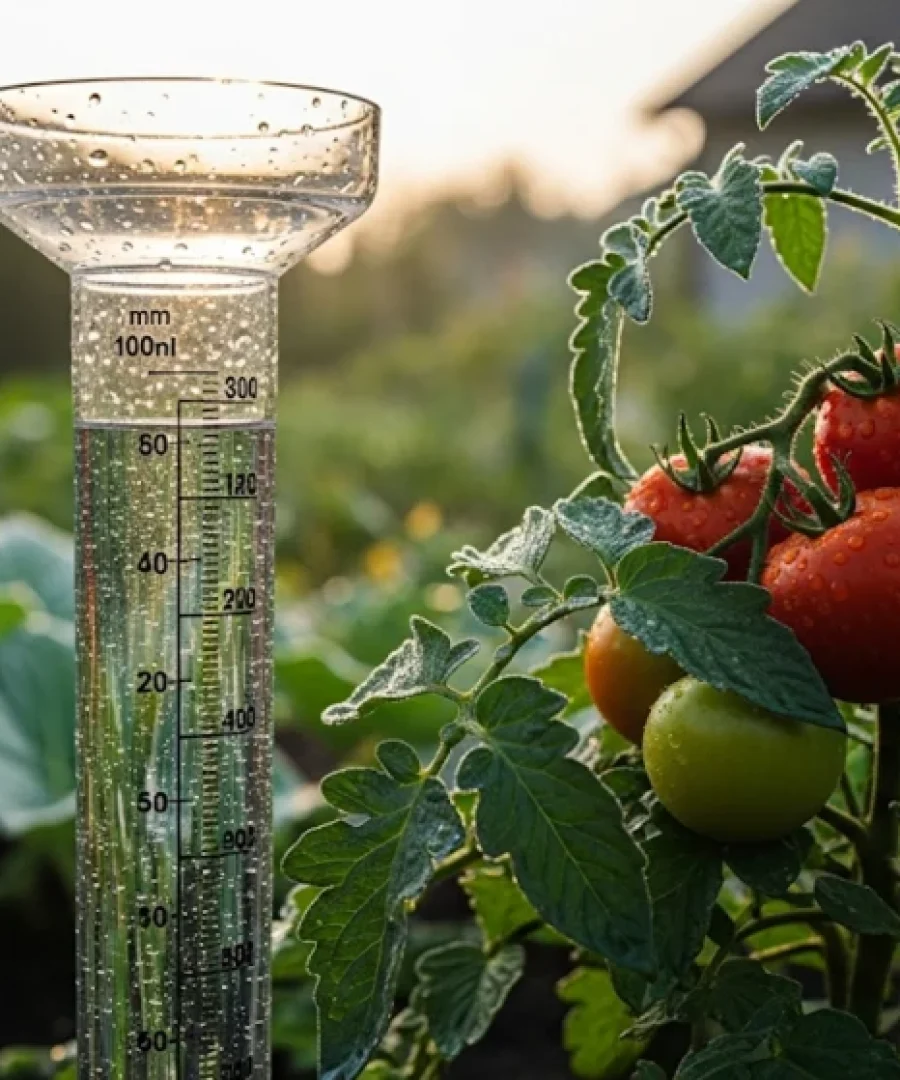
Rain Gauge: Take the Guesswork Out of Watering Your Garden
A rain gauge is a smart, simple way to stop overwatering your garden. For instance, if you’ve ever watered when the soil already felt damp, or watched a light shower and wondered whether it was enough, a rain gauge will feel like a small miracle. I remember clearly the season I lost half my tomato seedlings to overwatering — however, after I started tracking rainfall, they suddenly thrived.
In other words, a rain gauge gives you a clear, measured answer: how much water did the garden actually get? Therefore, no guessing. No guilt. Consequently, just plants that get what they need.
Ultimately, use a rain gauge to water smarter. Moreover, learn the different types, installation tips, and which gauge fits your garden. Above all, practical, human-tested advice makes all the difference.Quick Comparison: Types of Rain Gauges – At a Glance
| Type | How it works | Pros | Cons |
|---|---|---|---|
| Standard (cylinder / graduated) | Collects rain in a tube you read manually | Cheap, simple, accurate for home use | Must check/empty, subject to evaporation |
| Tipping-bucket | Rain fills small bucket that tips at fixed volume, counts tips | Works with weather stations, good for totals | Less accurate in very light rain or heavy bursts |
| Weighing (scientific) | Weighs collected water | Very accurate | Expensive — overkill for most gardeners |
| Digital / Wireless | Sensors measure and transmit data to a display/app | Convenient, stores history | Costly, needs batteries/maintenance |
Benefits and Uses of a Rain Gauge in Your Garden
- Save water and money by measuring actual precipitation, so you only irrigate when necessary, thus avoiding waste.
- Healthier plants, because many problems (root rot, nutrient washout) come from too much water, and a gauge helps you avoid that.
- Better scheduling is possible, as you can combine gauge readings with plant water needs to create simple watering rules (for example: skip irrigation if >½ inch fell in 48 hours).
- Local accuracy improves, since weather radar and forecasts are useful, but a backyard rain gauge tells you what fell exactly where your plants live.
Analog vs Digital: Which Should You Pick?
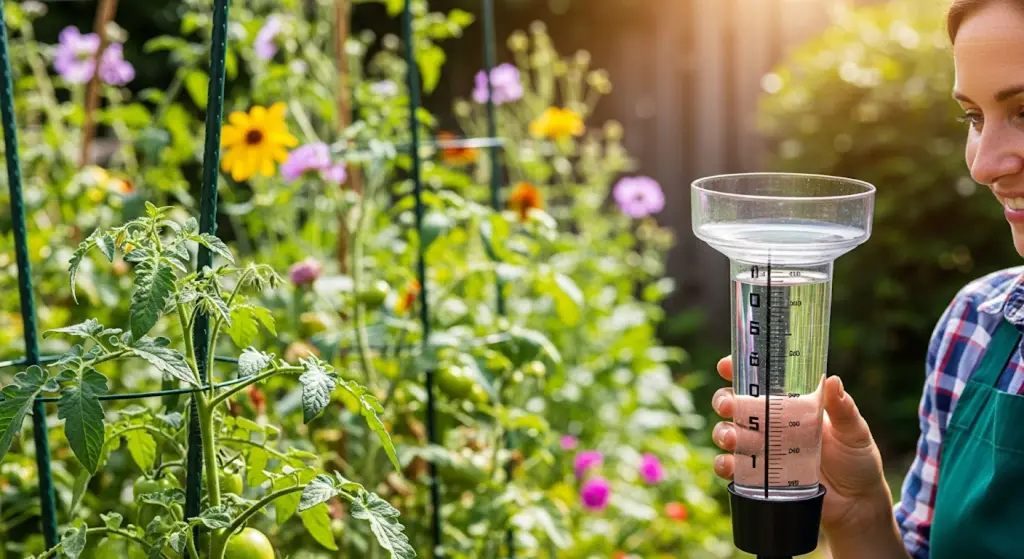
Analog (manual) gauges are reliable, low-cost, and fine for most home gardeners. For example, they require you to check after a storm and empty the collector.
On the other hand, digital/wireless gauges (and home weather stations) record automatically, give histories, and can integrate with smart irrigation controllers. Therefore, they’re excellent if you want hands-off tracking or remote monitoring — however, expect to pay more and perform occasional maintenance (batteries, cleaning).
Overall, for most backyard gardeners, a sturdy analog gauge is the best value; only upgrade if you need data logging or remote alerts.What to Look For: Useful Features
- Collection capacity & resolution: Look for at least 4–5 inches capacity and markings in 0.01–0.1″ (or 0.25 mm) increments.
- Material & durability: UV-stable plastic or glass; metal fittings resist wind.
- Ease of reading: Large, clear markings win. Some funnels and inner cylinders improve accuracy.
- Mounting options: Stake-mount or post-mount. Make sure it can be levelled.
- Maintenance needs: Removable inner tubes and anti-clogging screens help with leaves and debris.
How to Install a Rain Gauge (Simple, Practical Steps)
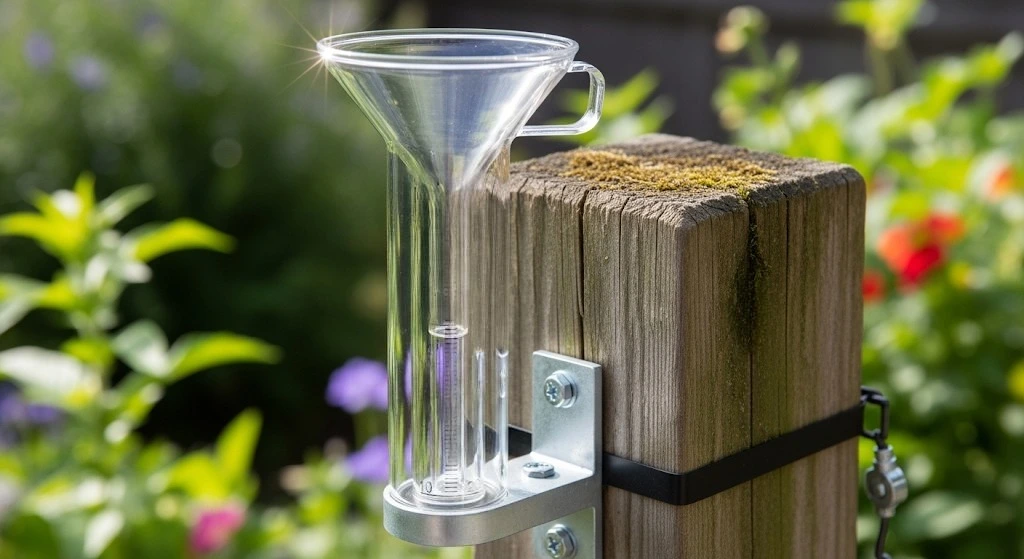
- Pick an open spot: keep it away from roofs, trees, and walls — a good rule is at least twice the height of the nearest obstruction.
- Height: mount the top roughly 1.5–2 feet (45–60 cm) above ground in open areas to reduce splash and wind error. (If your site is very windy, slightly lower can help.)
- Level it: use a small bubble level so the gauge sits perfectly vertical.
- Secure it: stake or bracket the gauge so it won’t tip in heavy storms.
- Read & record quickly: check the gauge soon after rain to avoid evaporation errors; empty after recording. NOAA and local extension services recommend prompt readings.
Handling, Maintenance, and Care
- Clean monthly (more in leaf-shedding seasons).
- Remove debris from the funnel/collector.
- Replace batteries for digital models annually or before the rainy season.
- Calibrate or compare a new gauge against a trusted neighbor’s or local station for the first few storms.
Simple Action Table: Use This With Your Gauge
| Measured rain (in) | Action next day |
|---|---|
| 0.00–0.10 | Light watering for seedlings only |
| 0.11–0.50 | No irrigation for established beds |
| 0.51+ | Skip irrigation for 2–3 days depending on heat |


Pingback: Black Mulch
Pingback: Hibiscus Tree: Charm and Healing Soft Power
Pingback: Zinnia Seeds: Pollinator Magnet, Stunning Blooms