
Home » Pruning Tomato Plants: The Juicy Benefits
Pruning Tomato Plants: The Juicy Benefits
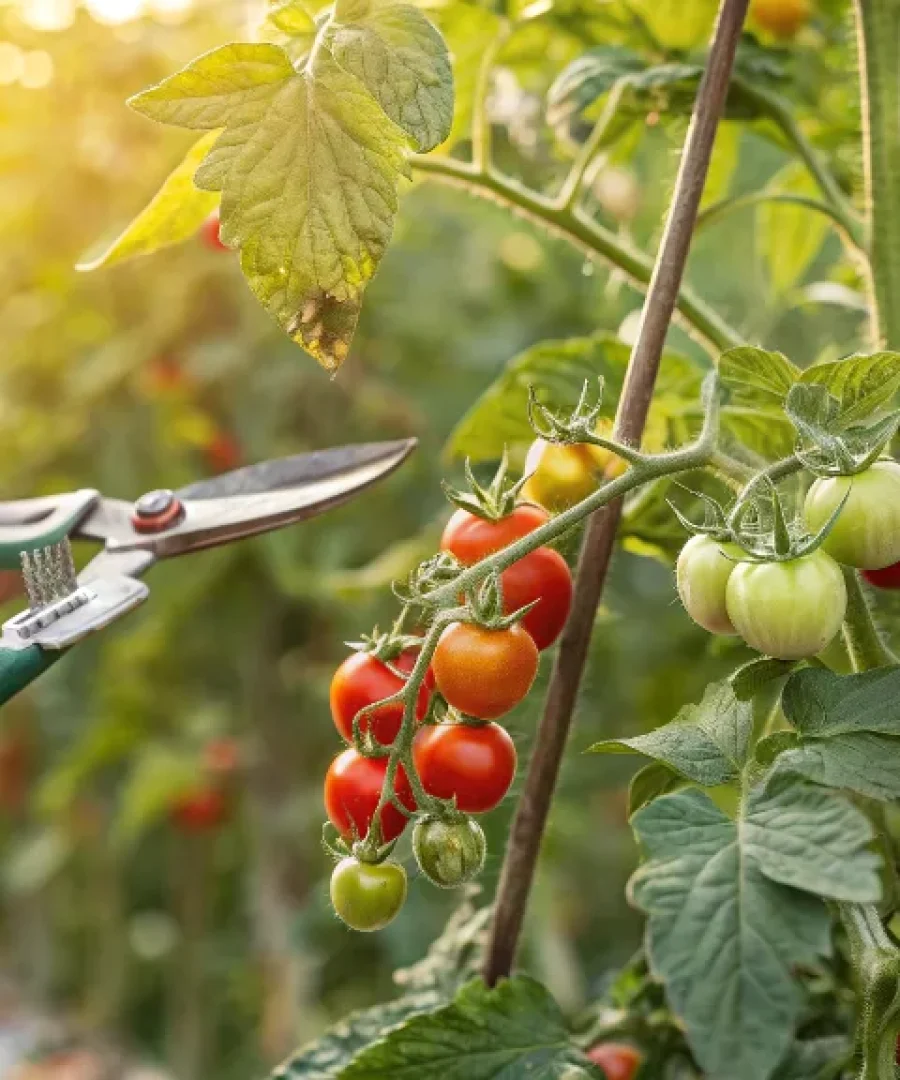
Pruning tomato plants is an idea and a skill that should not deter or intimidate you at all. In fact, the process is a simple exercise. With just a bit of practice, your tomato plants will grow healthier vines and bless you with a juicy yield. Basically, the skill set required is simply removing extra shoots and leaves. As a result, this will help each tomato absorb sunshine and nutrients without obstacles. Therefore, keep unruly and wayward foliage out of the scenario and harvest plump, juicy tomatoes every week.
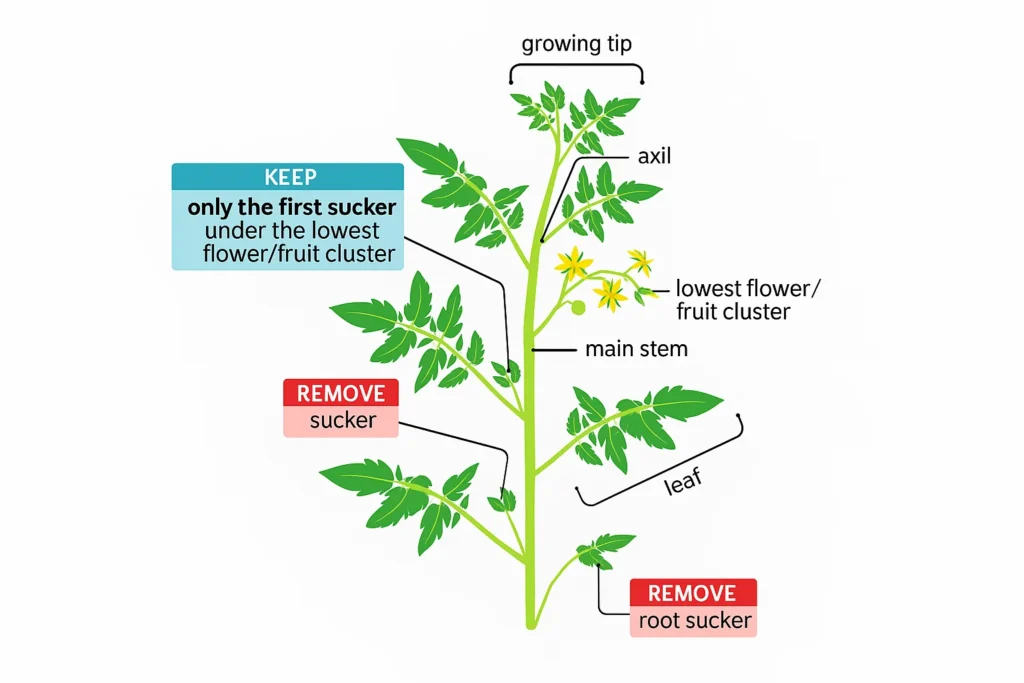
Moreover, precise pruning tomato techniques rooted in research and real-world experience are covered in this article. So, learn the nuances of pruning tomatoes the right way by clipping away the right bits to enhance airflow. Consequently, this allows the plant to fight disease and centralizes plant energy on ripening its healthy fruits. Ultimately, with this user-friendly process, we can together turn your tomato patch into a thriving cradle of delicious summer specialties for the kitchen.Tomato Pruning Diagram
Trimming Tomato Plants for Better Fruit Yield
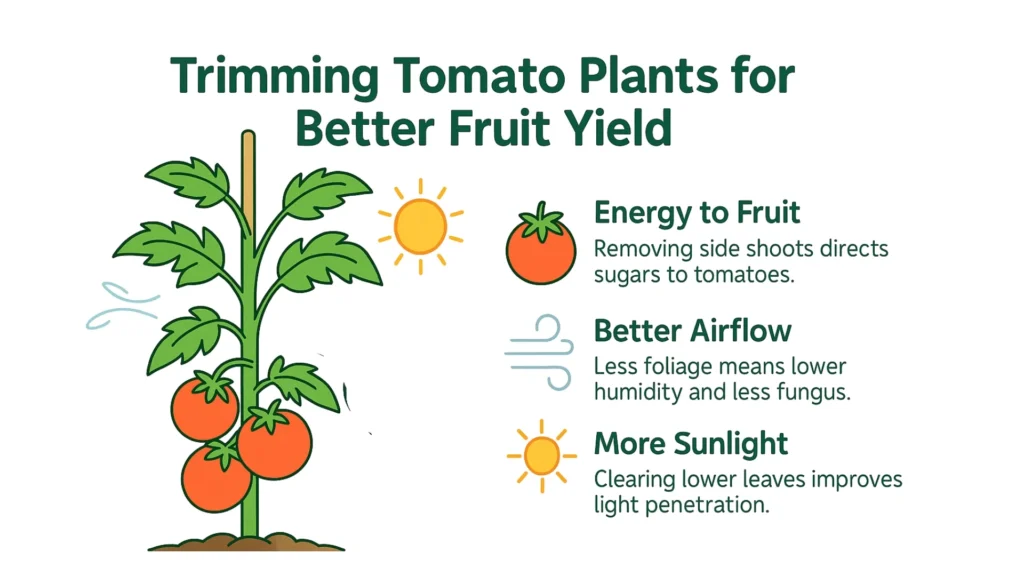
If the plant is pruned the right way, the plant’s resources concentrate on the health of the fruit and its growth, instead of supporting unruly extra foliage. Consequently, this simple method improves both yield and plant health.
Here’s why it works:
- First, energy allocation improves: removing side shoots helps concentrate sugars in the developing tomatoes.
- Next, enhanced air circulation reduces humidity, which in turn minimizes the risk of fungal diseases caused by excess foliage.
- Then, better exposure to sunlight allows fruits to ripen evenly, as lower leaves are cleared and light penetrates deeper.
Step-by-Step Process How to Prune Tomato Plants
To begin with, follow these steps—snapping photos as you go—to track progress and ensure consistency in your pruning routine:
- First, identify the suckers: Locate the suckers growing at the V-shaped joint between the main stem and a branch.
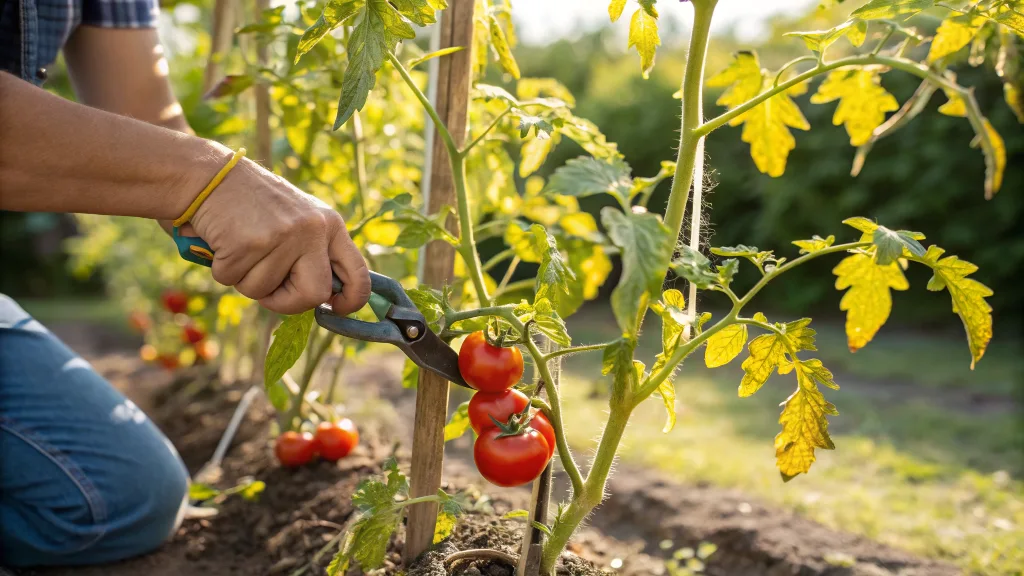
- Next, pinch, snip, or clip: Use clean, sharp pruners to avoid damaging the plant. Alternatively, pinch off smaller suckers with your thumb and forefinger.
- Then, remove yellowing leaves: Prune any leaves that show signs of yellowing, spots, or disease to keep the plant healthy.
- After that, maintain one or two main stems: Select the healthiest leader shoots and remove competing stems to focus growth.
How to Prune Tomato Plants Growing in Pots
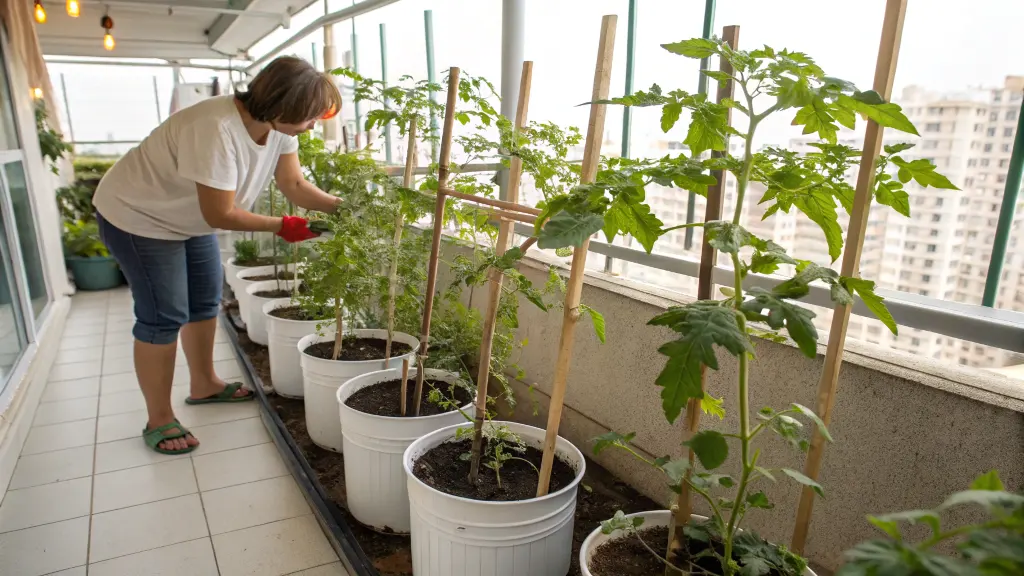
When growing tomatoes in containers, light pruning is essential for maintaining airflow and controlling plant size. To achieve the best results, follow these simple steps:
- First, remove lower leaves: Trim any leaves that touch the potting mix to prevent moisture buildup and potential rot.
- Next, limit suckers: Pinch off most side shoots, leaving only one per node to manage the plant’s shape and energy use.
- Then, support the stem: Tie the main stem to a sturdy stake to keep it upright and reduce the risk of breakage.
Tomato Pruning Mistakes
Avoid these common errors when pruning tomatoes to ensure healthy plants and abundant yields:
| Mistake | Consequence |
|---|---|
| Over-pruning | Sunscald on exposed fruit |
| Cutting too close to the main stem | Wounds that invite pathogens |
| Ignoring diseased leaves | Spread of blight and wilt diseases |
| Waiting too long between prunings | Overgrown plants that crowd each other |
When do you know it is very late to Prune Tomato Plants
You can prune until the fruit color starts to change. However, after tomatoes begin ripening, you should stop hard pruning. At that stage, only remove:
- Dead or diseased leaves.
- Branches that block light to green fruit.
How to Cut Back Tomato Plants for Winter
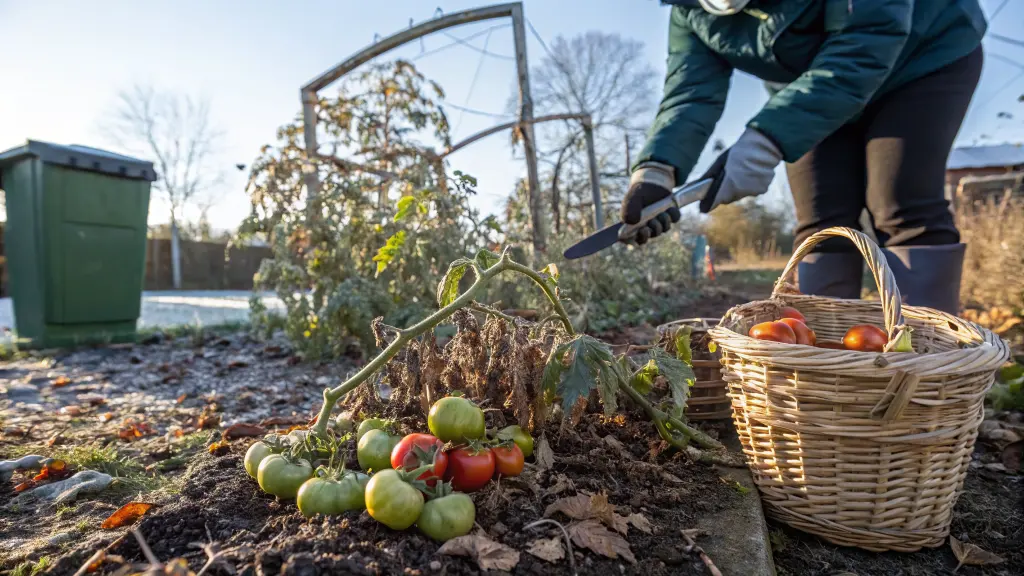
As frost approaches, it’s important to manage your tomato plants properly—whether for composting or preparing them for overwintering. Follow these practical steps:
- First, harvest remaining fruit: Pick all green and ripe tomatoes to avoid waste and salvage the final crop.
- Next, cut the main stem near the soil: Remove the plant cleanly at the base to prepare it for disposal or composting.
- Then, compost or solarize the debris: Clean up leftover plant material to reduce pathogen buildup and prepare your garden for the next season.
What to Do when Tomato Plants Grow Too Tall
Here are a few tips to stop the excessive vertical growth of tomato plants. Indeed, tall tomato plants can flop or break. Therefore, keep them in check by following these steps:
- Pinch the Top: When the plant reaches your support height.
- Use Pruning Clips: Secure new growth below the top tie.
- Choose Determinate Varieties: They naturally limit height.
Determinate versus Indeterminate Tomato Pruning
Here’s a quick comparison between determinate and indeterminate tomato varieties to help you choose what fits your gardening style best:
| Feature | Determinate | Indeterminate |
|---|---|---|
| Growth Habit | Bushy, stops at set height | Vining, continues until frost |
| Pruning Intensity | Light—mainly dead or diseased leaves | Moderate—remove suckers regularly |
| Best For | Container gardens, small spaces | High-yield harvests, staking needed |
| Harvest Window | Short and heavy | Continuous until frost |


Pingback: Garden Cart: Your Indispensable Garden Mate