
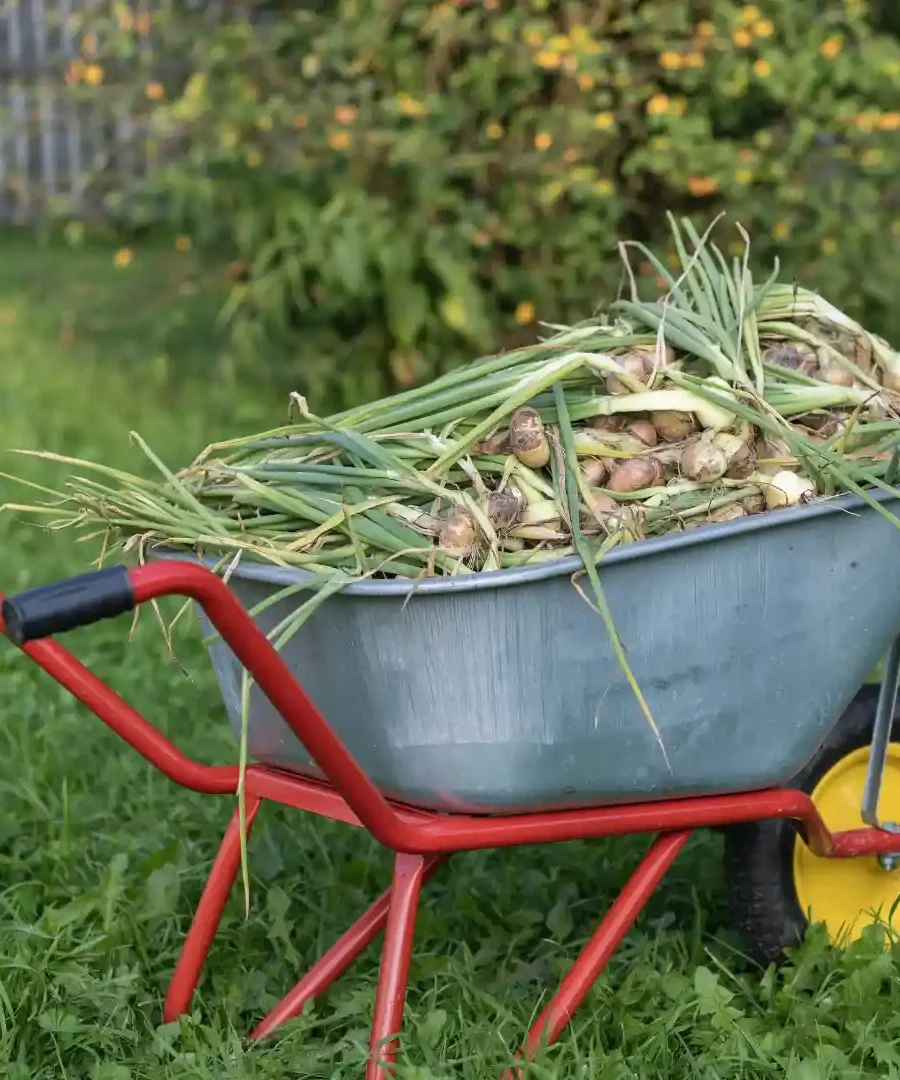
Garden Cart: Your Indispensable Garden Mate
Garden Cart is your trustworthy mate in the garden. Indeed, a true friend in need. For example, remember the back strain you suffered pushing a creaky wheelbarrow. Now, imagine using a gliding, smooth, ergonomically designed garden cart. Certainly, your back will thank you. As a result, tasks that once took an hour took thirty minutes.
Therefore, this guide is for gardeners who want smarter hauling. In short, less strain, more joy. Moreover, discover the best garden cart for your yard. Specifically, types, features, and buying tips to haul smarter. Finally, garden cart essentials in one place.Garden Cart Types
A good garden cart saves time and protects your body. Moreover, use one to haul soil, compost, mulch, pots, and tools in fewer trips. Furthermore, a cart also stabilizes heavy loads and keeps fragile seedlings safe.
In addition, garden carts also play multiple roles in the garden, as mobile potting benches or temporary plant-holding spots while you are preparing the bed. Consequently, mundane chores become pleasant stretches of outdoor work with this wonderful mate on wheels.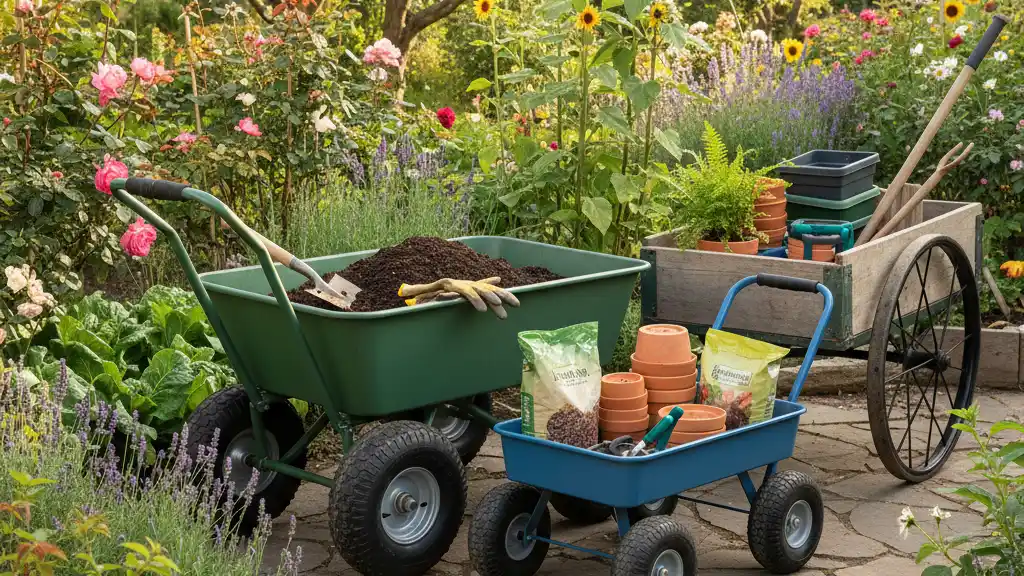
Types of Garden Carts (Quick Comparison)
| Type | Best for | Typical capacity | Pros | Cons |
|---|---|---|---|---|
| Dump Cart (poly tub) | Heavy loads, mulch, rocks | 400–800 lb | Easy to dump, low maintenance | Larger footprint |
| Steel Mesh Wagon | Landscaping, rough use | 300–800 lb | Very sturdy, high capacity | Can rust without care |
| Plastic/Resin Wagon | Light yard work | 100–400 lb | Lightweight, rust-free | Lower weight capacity |
| Foldable/Collapsible Cart | Small yards, storage-limited | 100–300 lb | Compact storage | Less rugged |
| Single-wheel Wheelbarrow | Tight corners, steep slopes | 100–200 lb | Great maneuverability | Requires balance, straining on the back |
How to Choose the Right Garden Cart
When choosing the right garden cart, it is important to consider a few key factors. Therefore, ask three questions first:
- What will I haul?
- Where will I use it?
- Where will I store it?
Next, match capacity to your chores. For example, for regular heavy work, choose 400+ lb capacity. Meanwhile, for light beds and planters, 200–400 lb is fine.
Moreover, consider the terrain. Big pneumatic tires roll over roots and rough turf beautifully. On the other hand, solid or flat-free tires are lower maintenance for smooth lawns.
Finally, think about storage. If you have a small shed, foldable or narrow wagons are winners. Conversely, if you can store outside, steel frames with a rust inhibitor will last.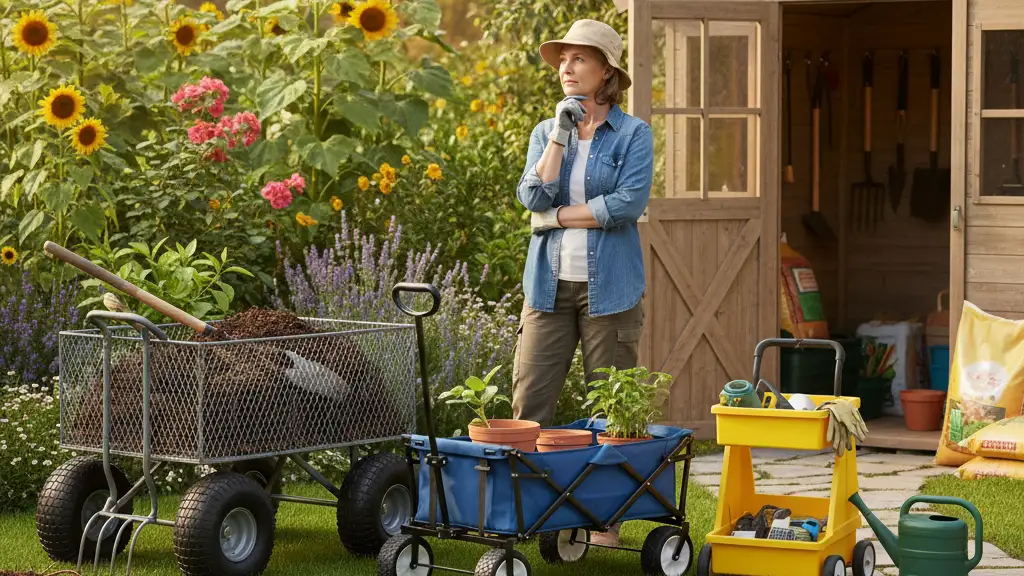
Key Features — What Really Matters
- Weight capacity: First, never push a cart to its limit regularly: Therefore, aim for a buffer of 25–30%
- Material: Moreover, steel frames are strong: In contrast, poly tubs resist rot and denting: Meanwhile, wood has charm but needs upkeep
- Dump feature: Furthermore, a quick-release dump saves bending and tipping: Specifically, for mulch, gravel, or compost, it is a winning tool
- Handles & ergonomics: In addition, long, padded handles and swivel heads reduce torque on your shoulders: Consequently, look for adjustable options
- Tires & maneuverability: Finally, pneumatic tires cushion bumps: On the other hand, solid (flat-free) tires cut maintenance: Similarly, wider tires reduce rutting on soft soil
Garden Carts: Small versus Large Gardens
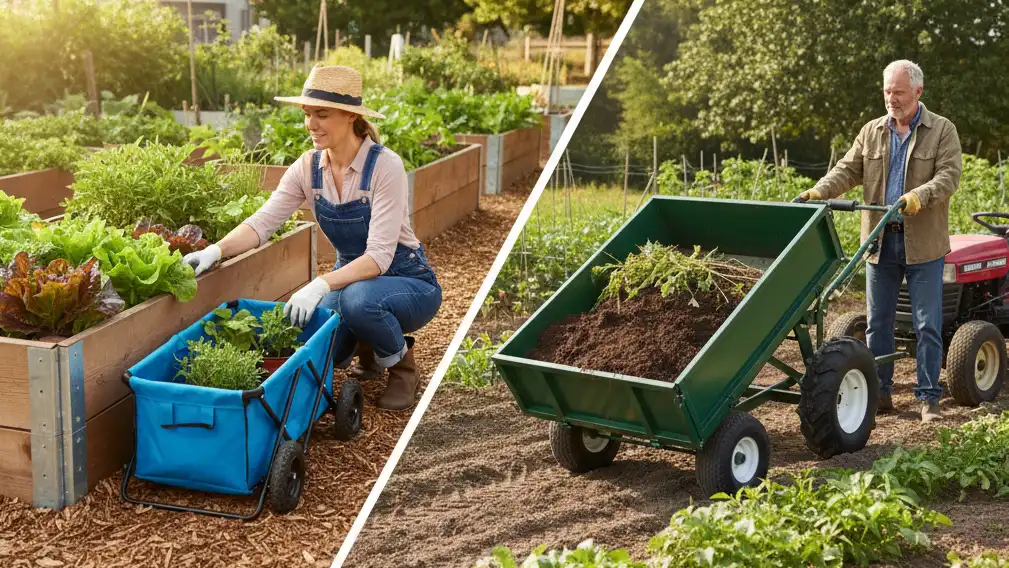
- Small gardens and raised beds: Firstly, A narrow wagon or collapsible cart with low sides is ideal: Therefore, You do not have to lean over to reach in and out of raised beds: Additionally, Foldable designs save space
- Large gardens and vegetable patches: Moreover, Going heavy-duty is the Mantra: For instance, A large steel wagon (dump cart) can handle bulk soil and earth and transport debris: The best part is that they can be towed by small tractors
Buyer’s Table: A Quick Peek
| Scenario | Recommended cart | Why |
|---|---|---|
| Raised beds, tight paths | Narrow, collapsible wagon | Fits gates, easy storage |
| Heavy mulch/rock delivery | Poly dump cart with pneumatic tires | Easy dumping, comfortable roll |
| All-around yard work | Steel mesh wagon, pneumatic tires | Durability + capacity |
| Limited storage | Foldable/cart with removable sides | Compact, versatile |
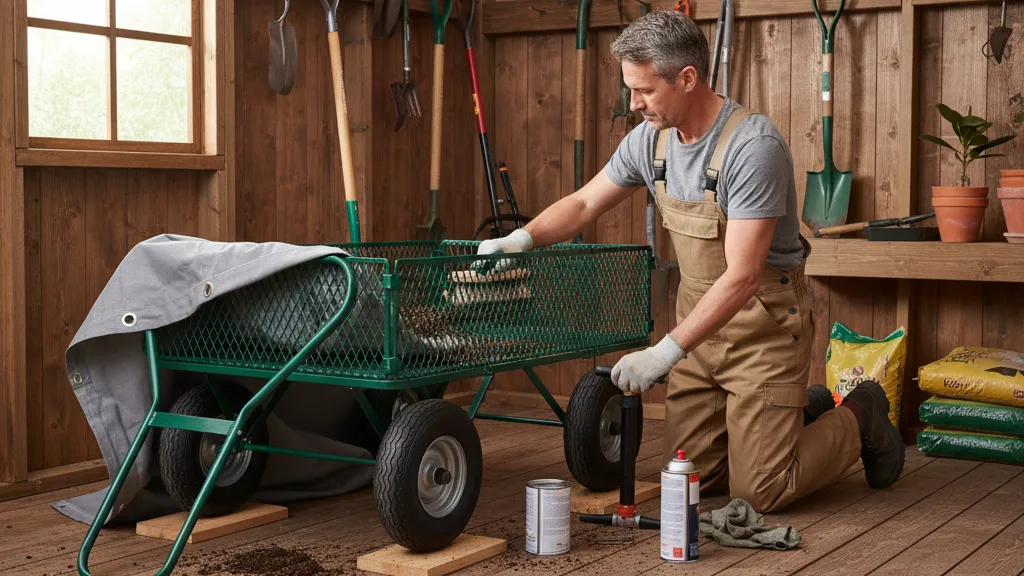
Storage & Care Tips
Summary
FAQs
1. What is the best type of garden cart for a small yard and large gardens?
Small yards: narrow collapsible wagons or resin carts. Large gardens: dump carts or heavy-duty steel wagons with high capacity.


Pingback: Hibiscus Tree: Charm and Healing Soft Power