
Home » Fig Tree Care: Your Friendly Guide to Growing Happy Figs
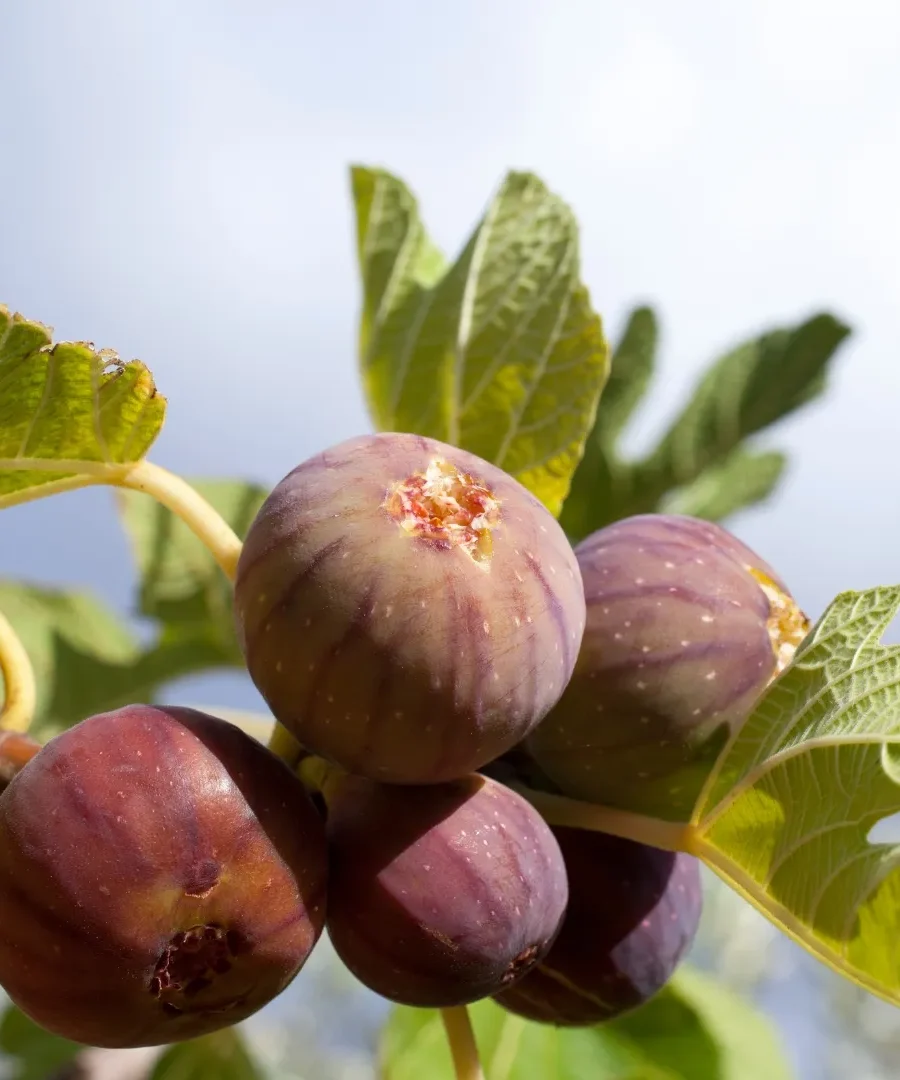
Fig Tree Care: Your Friendly Guide to Growing Happy Figs
Why Fig Trees Are So Special
Fig tree care can bring about the magic that healthy fig trees are known to have. To begin with, for thousands of years, the wonderful fig trees have not only been symbols of history but are also cherished for their nutritious fruits. In fact, Ancient Rome considered them sacred as they stood for abundance and prosperity. Additionally, the legendary tale that they provided shelter to Romulus and Remus, the founders of Rome, is folklore.
Even in today’s modern times, fig trees are showstoppers wherever they grow. Moreover, the delicious jammy fruit they produce and their lush green foliage are a blessing for any garden. Interestingly, they are surprisingly easy to grow. As a result, these trees fit and showcase their looks and fruiting capabilities with aplomb. Whether planted in a sunny patio, modest balcony, or a wide yard, they will always exceed your expectations.
At times living for more than a century, they can easily adapt to different climatic zones. Consequently, the next generation will celebrate the stunning tree and its fruits!
So, ready to grow one? Then come, let us take a deep dive into this article to learn the basics and process of growing and caring for a fig tree.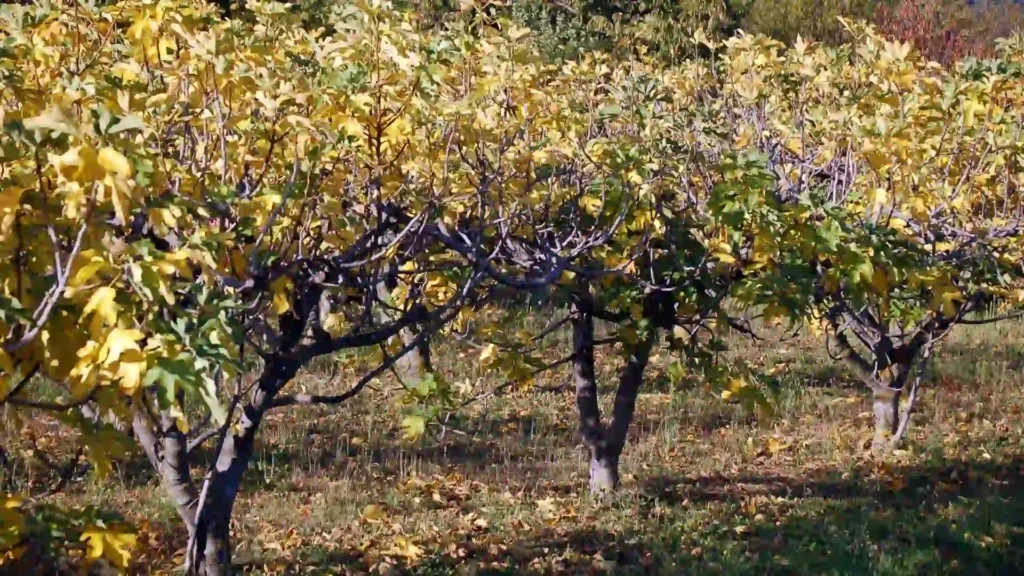
Fig Tree Care Outdoors
6 to 8 hours of sunlight is what fig trees love. Therefore, it is advisable to plant them in soil with well-draining capacity and a more or less acidic pH of 6.0 to 7.5. As for the watering schedule, water occasionally but deeply, and avoid administering frequent sips. Moreover, during fruit formation, that extra drink helps.
When springtime comes calling, administering an 8-8-8 balanced fertilizer is important. In addition, to encourage fruiting, late winter pruning helps and does wonders for the health of the fig tree.
Finally, some TLC is vital if you belong to a harsh winter zone. A burlap-wrap or mulch around the base for extra warmth to the tree in winter is love.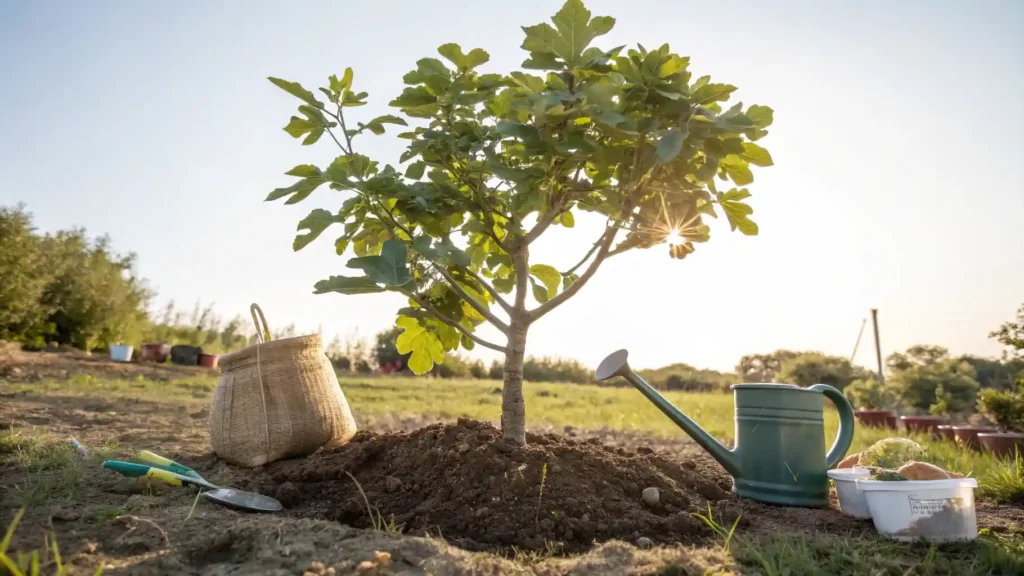
Fig Tree in Containers: Small Spaces, Big Rewards!
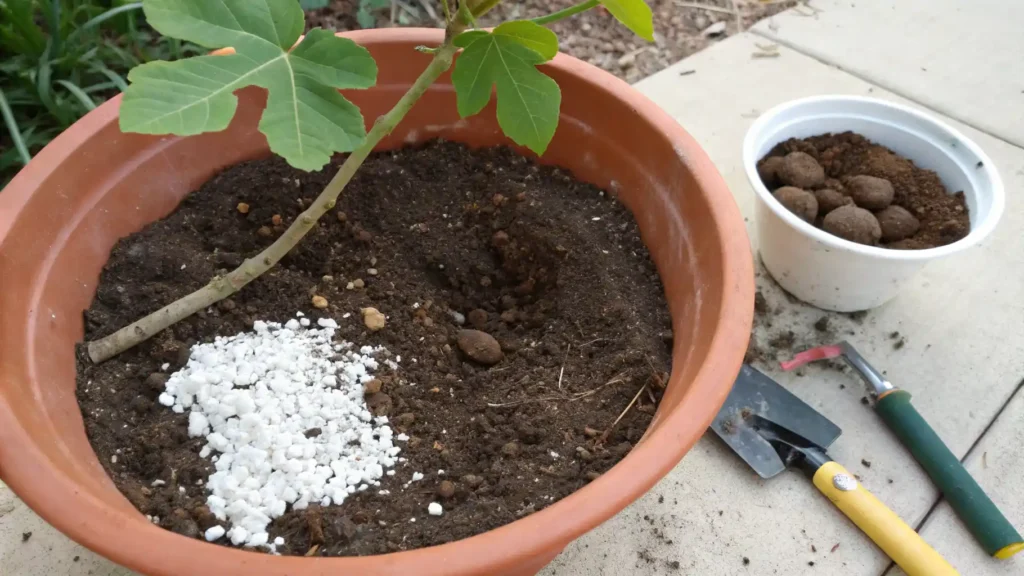
No garden? No problem. Figs are surprisingly happy in containers. To start with, choose a sunny spot and begin with a 50-gallon container to begin the journey. Additionally, use a well-draining soil mix that is a composite mix of half compost and half perlite is great.
During the growing season, the plant will require a slow-release fertilizer. Furthermore, keep checking the soil for dryness, to give water only when the top inch is dry. Moreover, install the pot indoors to a cool space when it is wintry cold. Also, water sparingly, and only that much to keep it alive in winter. Eventually, upgrade to bigger pots if you feel like it and like to have more fruits to grow. After all, size matters!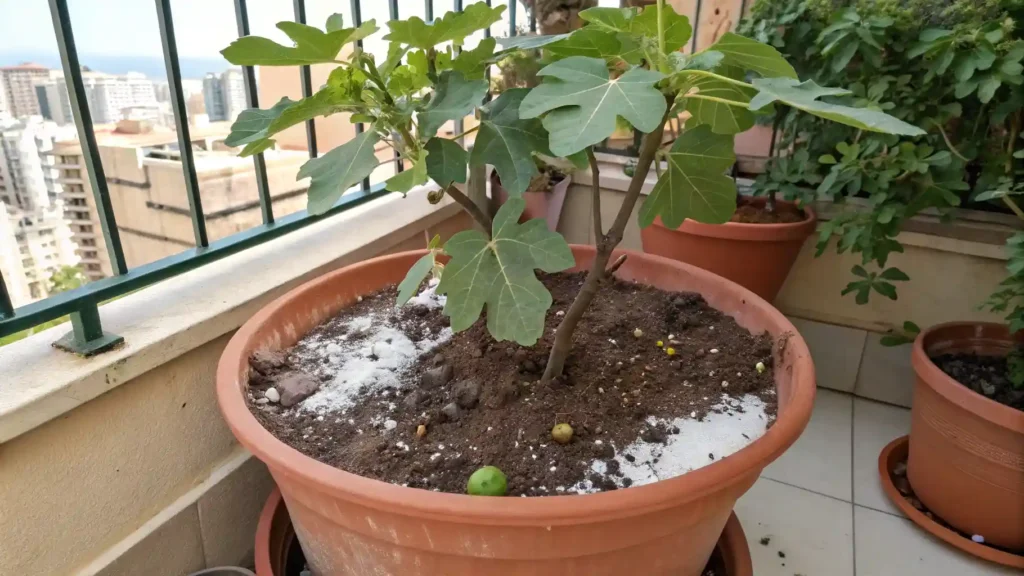
When do fruits show in Fig Tree?
Patience is paramount! Typically, it takes 3 to 4 years in most plants after plantation. Generally, late summer through early fall is the period when fruits ripen. Interestingly, some varieties even give an early “breba” crop in spring, though it might not ripen in cooler areas.
Sunlight and care matter here. Therefore, more sun equals more figs! One important piece of advice is to keep the fruits away from birds, as they love figs. Hence, incorporating netting during fruiting season is advisable.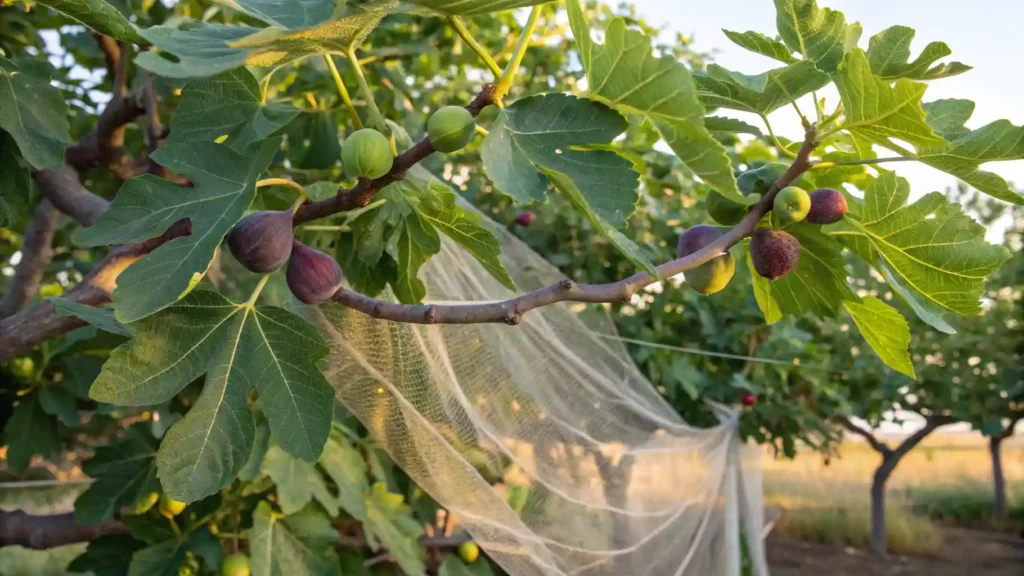
Pruning Tips
Pruning is not just making the tree look presentable. In fact, by pruning, your fig tree will grow strong, healthy, and give you more fruits. Ideally, late winters are the best time period for pruning as the tree is dormant. As soon as you notice them, cast away dead or diseased branches. Therefore, the canopy is thinned out and gives way to sunlight to reach inside the tree.
Young trees? Then go for the 3 to 5 prominent branches. On the other hand, older ones just need to be cleaned and tidied up. Additionally, disinfect tools for every use, as you go to the next tree. Most importantly, use clean and sharp tools and prevent infestations from other plants.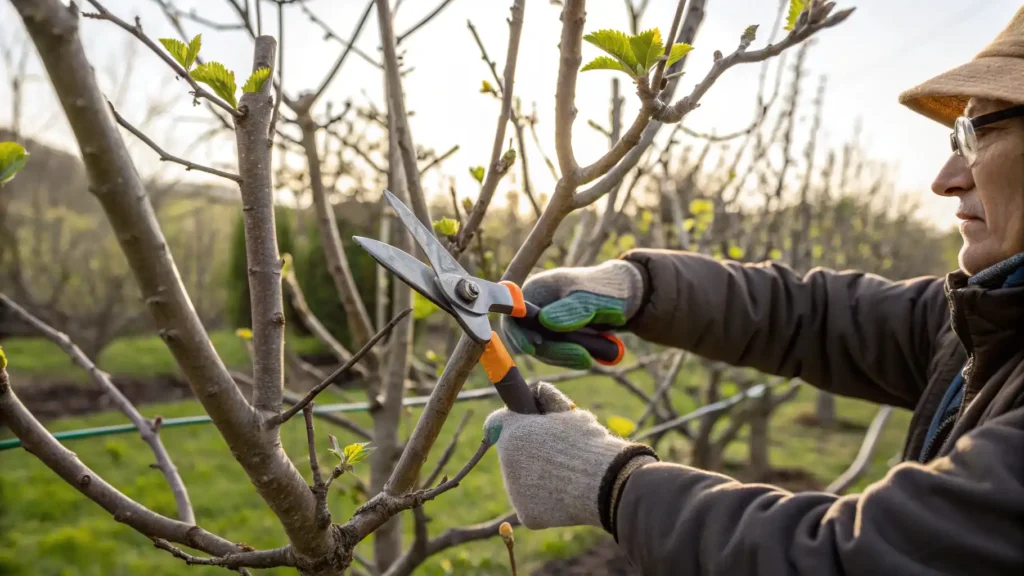
Winter Care for Fig Trees
If you reside in zone 6 or below, figs will need extra TLC. Therefore, piling of mulch at their base and a burlap wrap around the tree will safeguard their health.
As for potted figs, water very little after transporting them indoors.
In such climates, ‘Chicago Hardy’ is an apt variety.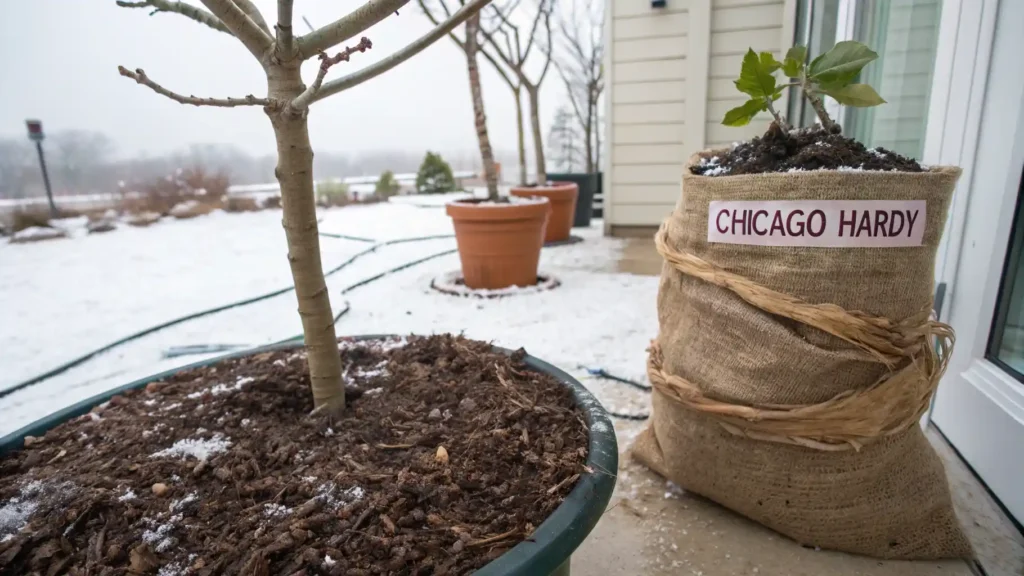
Best Soil for Potted Figs
Summary
Fig tree care is easy with some tender, loving care. Moreover, these historically significant trees are forgiving and deeply rewarding. Provide them good soil, pruning care, winter love, and lots of sunshine, and receive beauty and fruits in return.
Figs add that extra something to your home. Stylish indoors, majestic outdoors, or convenient in pots, plus their gourmet fruits for harvest, they are generational heirlooms.
So, it is time you start today. Select the fig tree that suits your home and taste, pick a sunny spot, and a terracotta pot to embark on this voyage. Bon Voyage!


Pingback: Closet Door Design: A Functional Style Statement
Pingback: Govee Floor Lamp: A Smart Way to Brighten Your Home
Pingback: Pressure Washer Hose: Modern and Functional - ytvblog.com