
Home » Hydrangeas: Grow and Care of Gorgeous Blooms
Hydrangeas: Grow and Care of Gorgeous Blooms
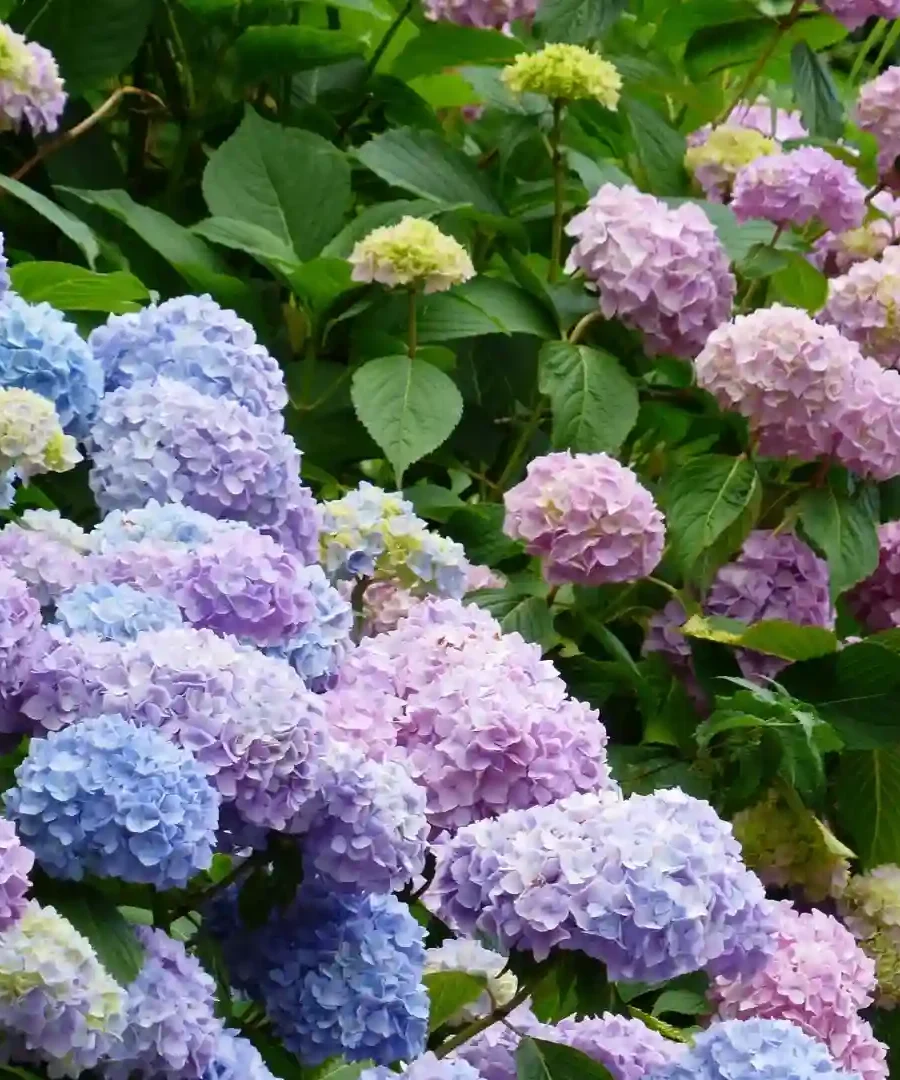
Hydrangeas are stellar blooms that can elevate the vibrancy of any garden. In fact, their presence itself will make a master painter look no further for a muse. Whether in wedding bouquets or on flower beds, hydrangeas steal the show every single time with uniqueness and personality. For both seasoned and debutant gardeners, they are the go-to plant for all. Versatile and robust, belying their delicate blooms, they sit pretty in garden beds, look splendid in pots, and create stunning hedges. Because they adapt to various settings, growing hydrangeas becomes a joyous journey.
Now, in this article, let us try to learn the maximum about growing and maintaining these natural stunners — right from choosing the right variety to mastering their care. So, it is time to put on your gardening gloves and get set to traipse through the enchanting world of hydrangeas!The Hydrangea Family
Hydrangeas come in various vibrant flower styles. To get started, take a peek below:
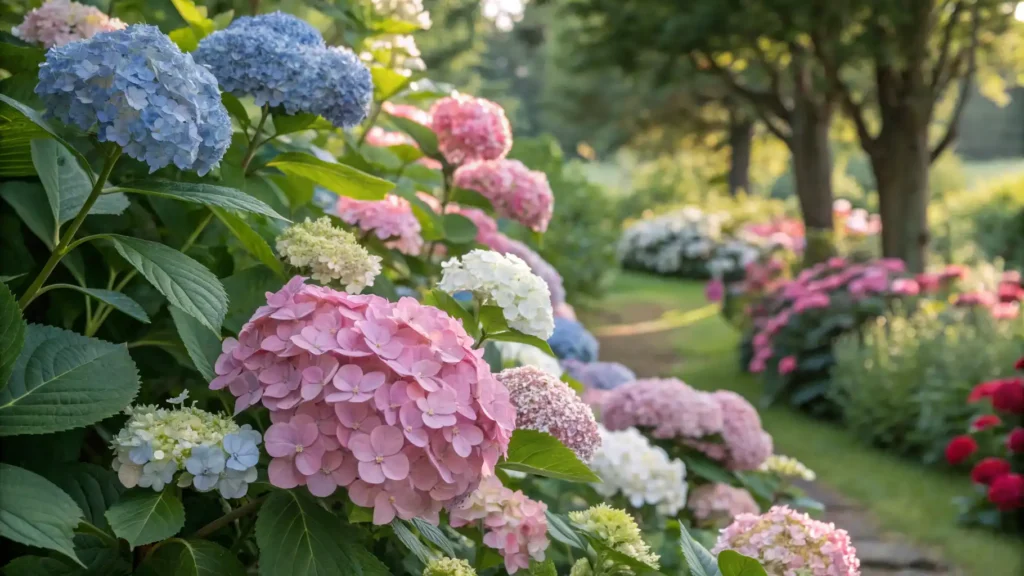
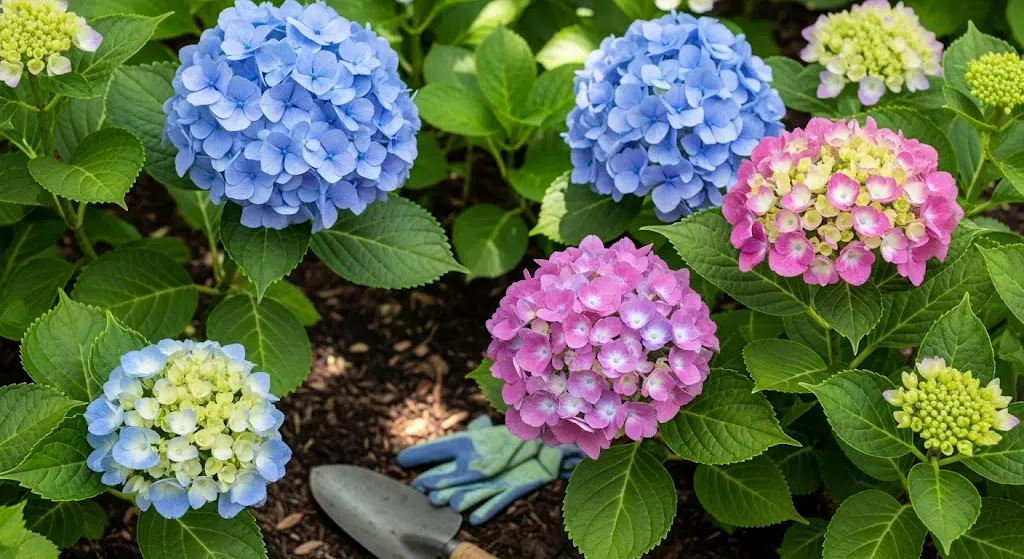
- First, Mophead: Round-shaped with bold blooms in blue, pink, or white—colors shift with soil pH.
- Next, Lacecap: Lacy petals surround flat centers, with colors that gradually change over time.
- Then, Panicle: Conical clusters that start white and shift to pink or red.
- Also, Oakleaf: Distinctive leaves turn red in fall, paired with conical red blooms.
- Finally, Climbing: Vines that climb and produce white lacecap flowers.
Bigleaf Hydrangeas: Big and Beautiful
Planting Tips
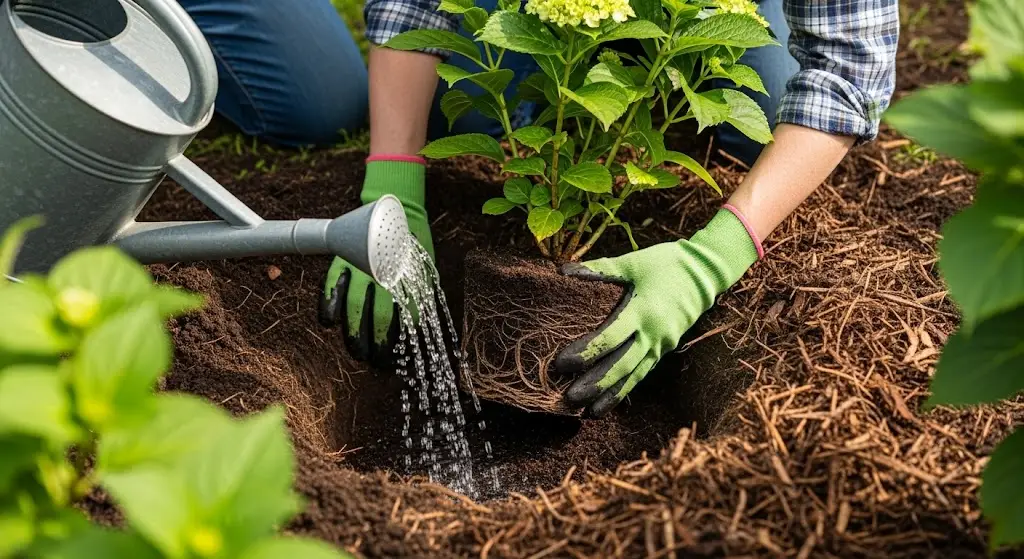
Set your hydrangeas up for success:
Spring or fall is the best time for planting. During these seasons, good drainage is ensured.
Here’s how to do it right:
- First, elect the right spot: Aim for morning sun and afternoon shade to avoid leaf scorch.
- Next, prepare the soil: Blend compost or peat moss with soil in a wide dugout hole.
- Then, plant properly: Ensure the root ball is level with the soil, backfill the hole, and water thoroughly.
- Finally, add mulch: Apply 2–3 inches of organic mulch around the roots to retain moisture.
Where to Find Hydrangeas
Regional Growing Hydrangeas
- First, make smart purchases: Go to trusted sources like Proven Winners or local nurseries. Consider your soil and the climate’s hardiness zone. Dig in with a bit of research.
- Next, if you’re in Florida: Oakleaf or Panicle hydrangeas are well-suited to the heat. Give them morning sun, afternoon shade, regular watering, and well-drained soil.
- Then, think about winter care: In zones 3–5, burlap-wrapping and mulching are essential. In milder zones, light mulching is enough.
- Finally, for Texas gardens: Go for Oakleaf, Panicle, or ‘Endless Summer.’ Provide plenty of shade, use a quality soil mix, and water regularly.
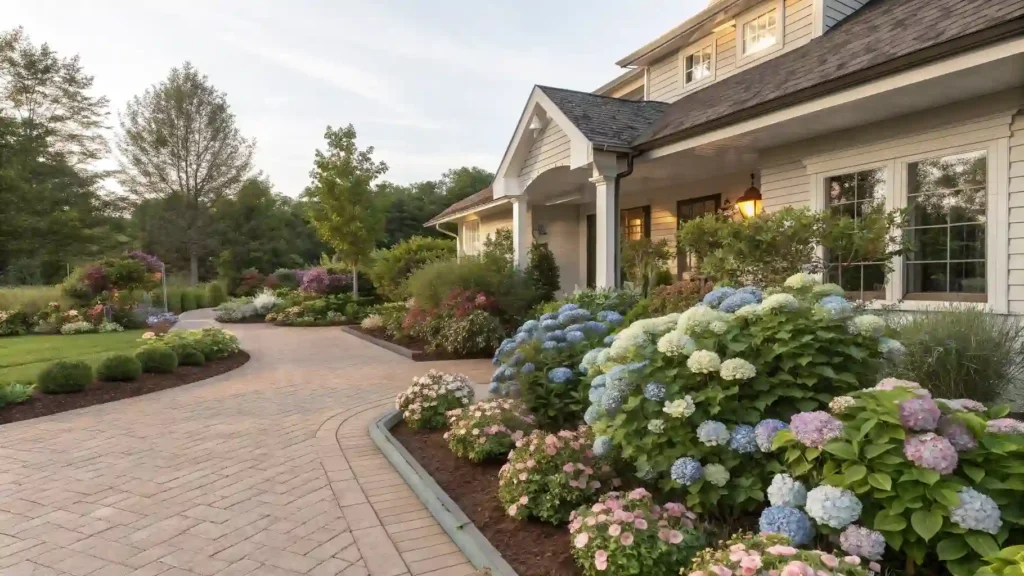
Growing Hydrangeas in Pots
A blessing for modest spaces:
- The Right Pot: Minimum 24 inches in width, with drainage holes.
- The Perfect Soil: 20% compost, 30% fish soil blended into 50% potting soil.
- Watering Timetable: Water only after the topsoil is dry. Soak thoroughly.
- Fertilizer Time: Skip administering fertilizers during late summer. Springtime is ideal for a slow-release fertilizer.
- Winter Care: Insulate and provide shelter to pots when the chill strikes.
Care Basics
Keep hydrangeas happy with:
- Watering Agenda: One inch a week is sufficient in most cases. Provide more water when the mercury goes up. Avoid soggy soil.
- Fertilizing Agenda: For best results, use a slow-release 10-10-10 fertilizer during spring and mid-summer.
- Pruning Agenda: Panicles and smooth varieties need pruning in late winter. Mopheads and lacecaps after summer.
- Pests: Be vigilant and inspect regularly for usual suspects like aphids and mildew. Insecticidal soap or fungicides can eliminate them. You can also look out for organic pest deterrents.
| Care Aspect | Details | Best Practices |
|---|---|---|
| Watering | 1 inch/week | Check soil; water thoroughly |
| Fertilizing | Spring, mid-summer | Avoid late feeding |
| Pruning | Varies by type | Old wood: post-bloom; new wood: late winter |
| Pests | Aphids, mildew | Use fungicides; ensure air flow |
Troubleshooting
- No Blooms: Wrong pruning or too much shade. Prune correctly, protect from frost.
- Yellow Leaves: Adjust watering or reduce fertilizer.
- Wilting: Water deeply, add shade in hot climates.
Summary
With elegance and vibrancy par excellence, hydrangeas are celebrated wherever they grow. Moreover, versatile and adaptable to various conditions, they suit Florida’s humidity, Texan summers, or sit pretty in a pot. Whether in expansive landscapes curated by an artist or on the patio of a modest house, they spread charm unlimited. Interestingly, they let you experiment with the soil pH to change to dream colors you like. Meanwhile, the majestic bigleaf or the compact hydrangea for small corners is an aesthetic bonus.
Ultimately, hydrangeas just need a little TLC, mindful planting, partial shade, and a good watering schedule. In return, you and your immediate surroundings will be blessed by their stunning blooms. Despite their delicate blossoms, they are hardy and forgiving in nature. So, plant a hydrangea today!

Pingback: Closet Door Design: A Functional Style Statement
Pingback: Govee Floor Lamp: A Smart Way to Brighten Your Home