
Home » Ghost Orchid: Grow this Rare Enigma at Home
Ghost Orchid: Grow this Rare Enigma at Home
How to Grow the Rare Dendrophylax lindenii at Home. Discover how to grow the mysterious Ghost Orchid at home.
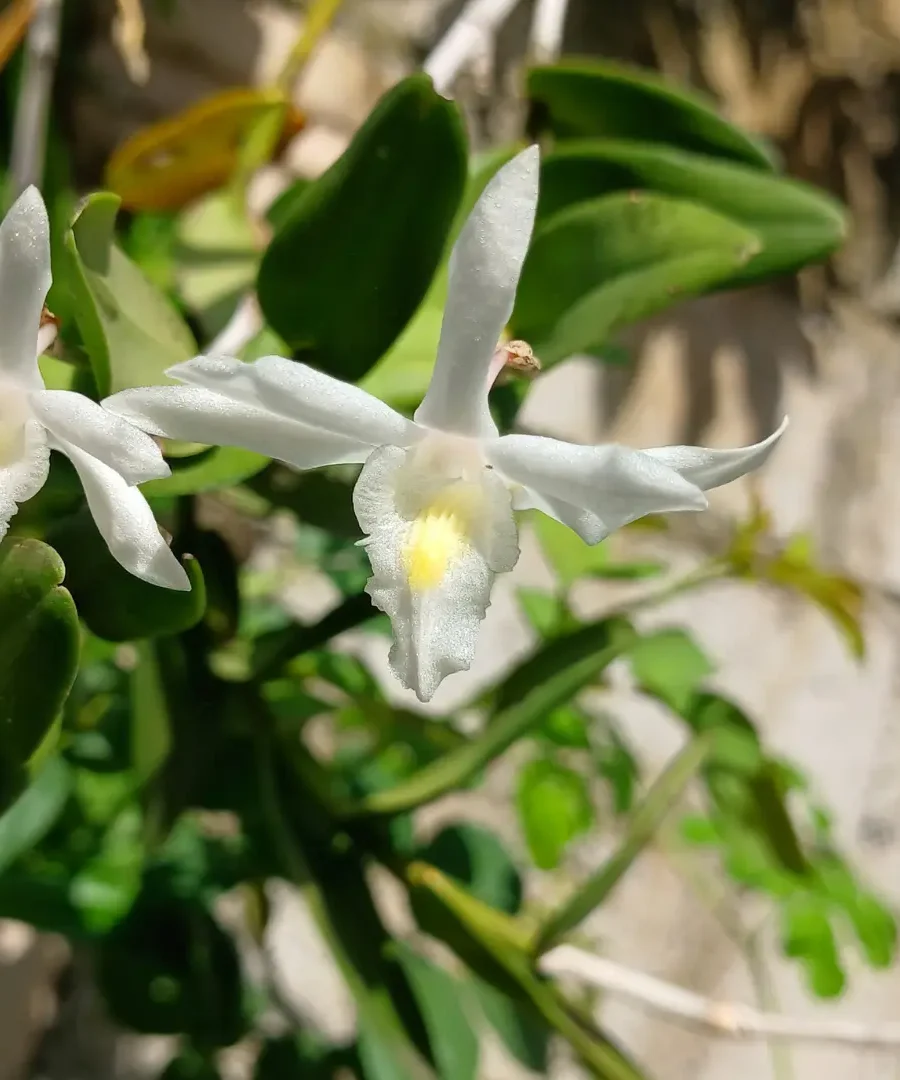
Imagine a translucent white flower floating in mid-air, attached to nothing but silvery roots. No leaves, no stem, just ethereal beauty. That’s the Ghost Orchid, and yes, you can grow this botanical legend at home.
However, there will be scepticism about growing a Ghost Orchid. On the other hand, this orchid is so rare to find even in the wild, let alone to cultivate. Indeed, it is a headline maker and head turner from time immemorial. There is a bright side to all its enigmas. In other words, with the right guidance, patience, and valuable knowledge, we can grow this species steeped in symbolism and mystery. Let us jointly explore expert tips on care, watering, light requirements, and avoiding common mistakes with this rare beauty.Why is the Ghost Orchid So Rare and Unique?
The Ghost Orchid is also known as Dendrophylax lindenii in the elite botanical corridors. A native of Florida (USA) and Cuba, they are blessed with delicate white flowers that seem to be suspended in the air. The gray-green roots of this orchid have white markings that perform photosynthesis, making it a botanical anomaly.
The plant lacks leaves entirely and photosynthesizes through its roots. While most plants rely on leaves for energy creation, the Ghost Orchid evolved its root system to handle both nutrient absorption and photosynthesis.
The species is currently endangered in Florida, restricted to 2 counties facing rapid development. The U.S. Fish and Wildlife Service proposes listing this swamp-dwelling orchid as endangered due to poaching, habitat loss, and degradation.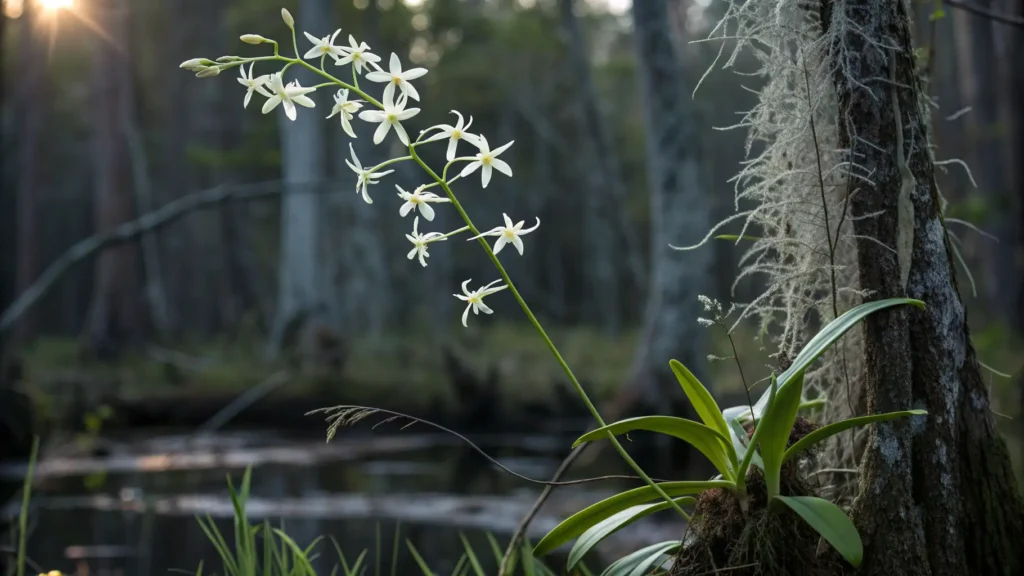
Symbolism
Mystery of the Ghost Orchid
The Ghost Orchid represents the ultimate horticultural challenge—successfully growing one is like earning a black belt in orchid cultivation.
During May-August, only small percentages of plants produce one white flower, rarely two. Ghost Orchid gives flowers without regularity. It does not flower at all during some years, mysteriously planning when to flower next.
Mother Nature’s complex relationships are symbolized by the Ghost Orchid by instilling perseverance in the grower. Suddenly, when you discover a magical bloom, your eyeballs and senses are blessed by nature’s best-kept secrets.Ghost Orchid in Your Home
Can you actually grow a Ghost Orchid at home? Yes, but it requires completely rethinking orchid care.
Forget traditional potting. The Ghost Orchid must be mounted on bark or wood with roots exposed. Use cork bark or hardwood mounts. Secure the root mass using soft ties. Furthermore, never use tight wires that damage delicate roots.Creating the Right Environment
Do not make the Ghost Orchid homesick. Therefore, it should feel at home in an environment akin to a Florida swamp. Enhanced humidity and day-to-day watering are vital for its sustenance, just like its Florida home. 60-70% humidity is advisable for the upkeep of these wonderful species.
Place multiple humidity trays around the plant and run a humidifier nearby. Some growers create mini greenhouse environments using clear plastic enclosures with ventilation fans.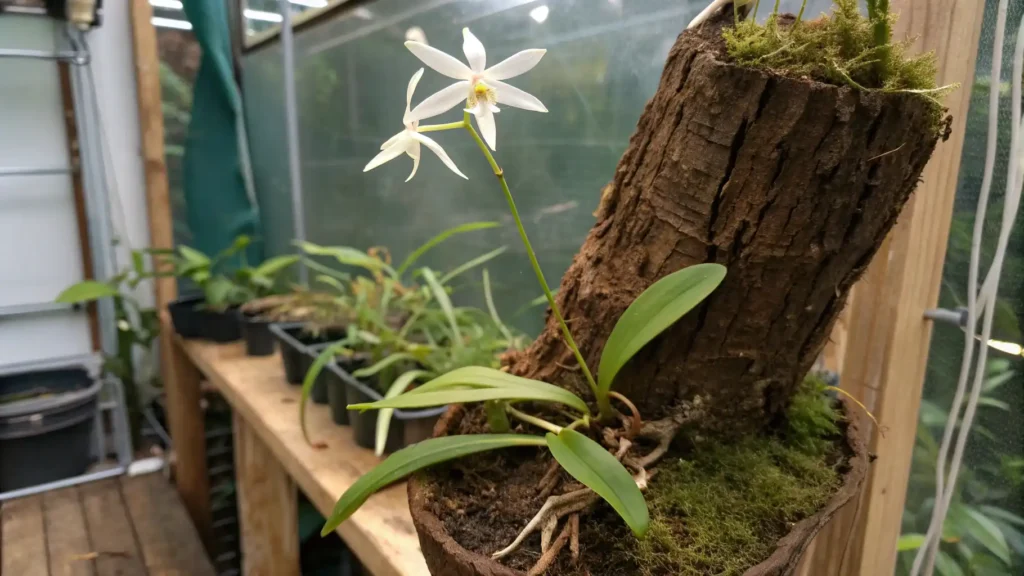
Climate Requirements for Ghost Orchid Growth
Most Advantageous Temperature Range:
- Daytime: 75 to 85° Fahrenheit (24 to 29° Centigrade)
- Nighttime: 65 to 75° Fahrenheit (18 to 24° Centigrade)
- Required Humidity: 60 to 80 percent
- Placement Tips: Never place near drafty windows, heating vents, or air conditioners
Light Requirements for Ghost Orchid
Ghost Orchids actually need bright, indirect light—contrary to common shade-growing advice.
I position plants 2 to 3 feet from east-facing windows with bright morning light filtered through curtains. Root tips grow continuously with bright light and regular fertilization.
Use full-spectrum LED grow lights by keeping them on for 12 to 14 hours daily. The lights should be installed and positioned 18 inches above the plant. Photosynthesis requires enough light, but avoid scorching the roots.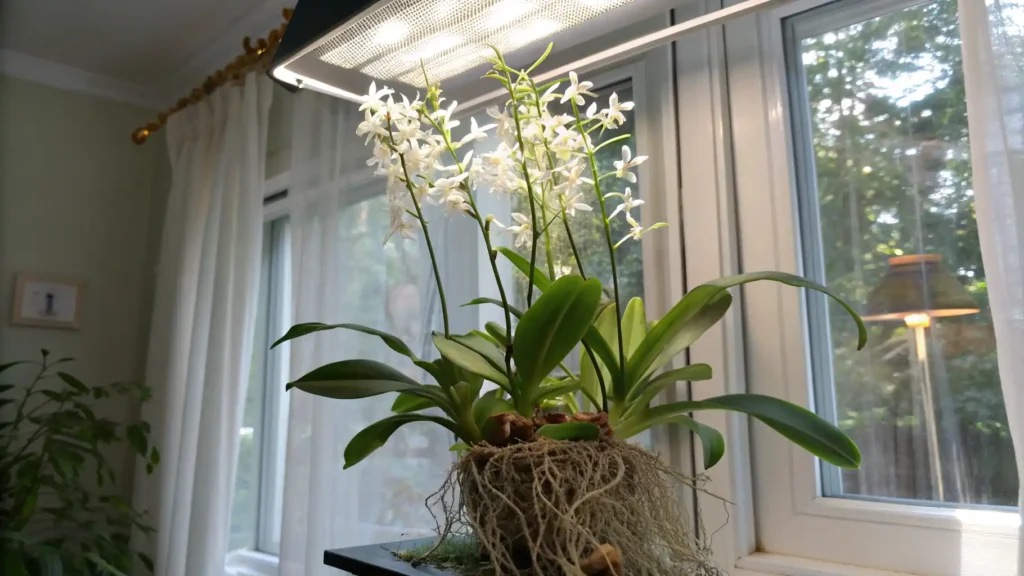
Watering Schedule for Ghost Orchid
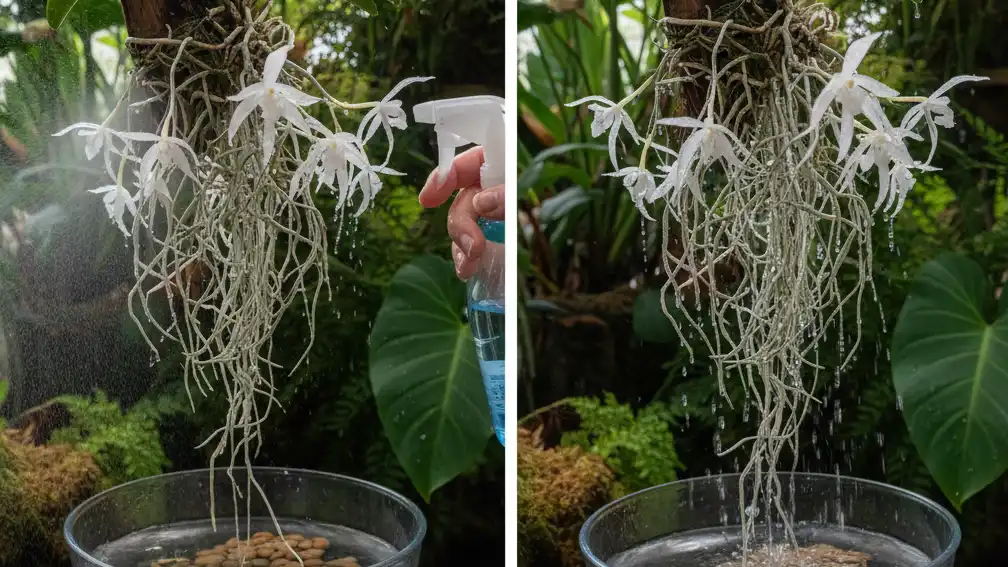
Ghost Orchids need regular misting as they dry quickly. Water should never remain standing in the roots.
- Morning misting: Light spray with distilled water
- Evening check: Silvery-white roots need water
- Deep watering: Weekly thorough soaking with complete drainage
- Humidity maintenance: Constant moisture monitoring
The Fascinating Pollination Process
Recent research revealed multiple hawkmoth species pollinate the Ghost Orchid—good news for this endangered species. Various hawkmoths with long proboscis visit flowers at night.
Successful pollination appears infrequent but not rare. In cultivation, you’re unlikely to witness this phenomenon, but understanding it helps you appreciate their specific growing requirements.Is the Ghost Orchid Resilient?
The Ghost Orchid is far from beginner-friendly. However, after being properly established, their surprising resilience comes to the fore. Plus, they can also withstand small lapses in care.
Imitating a natural habitat and environment provides them with their inherent resilience. They are known to survive hurricane seasons, dry spells, and constant humidity in the wild.Pest and Disease Control
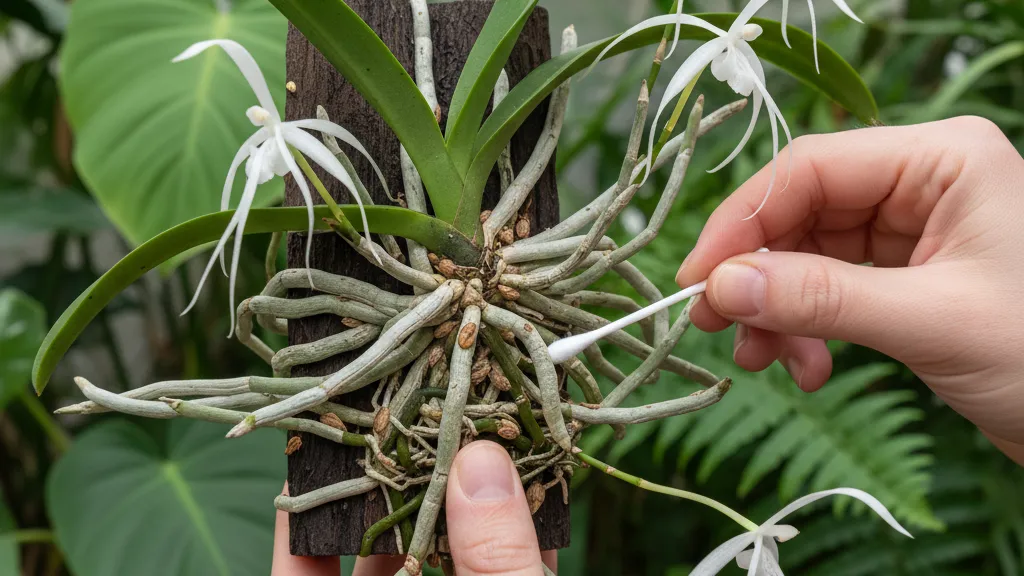
- Ghost Orchids face unique challenges due to exposed roots and high humidity needs:
- Harmful Scale Insects: Look for them in root crevices. Rub and clean them out with alcohol-soaked cotton swabs.
- Ruinous Fungal Issues: Water stagnation and insufficient air circulation must be addressed to ward off fungal issues.
- Villainous Spider Mites: Pests attack when humidity is low. Maintain proper moisture levels to prevent infestation.
Critical Mistakes: How to Avoid
Common fatal mistakes:
- Inundation: Overwatering, and not drought, kills most plants.
- Wrong mounting: Materials retaining moisture kill plants.
- Humidity Deficiency: 30 to 40% humidity in homes is not sufficient.
- Inconstant Temperature levels: The plant can be stressed by temperature fluctuations.
- Impatience and over-excitement: More than required care can make these slow-growers suffer.
| Mistake | Consequence | Solution |
|---|---|---|
| Overwatering | Root rot | Daily misting, weekly soaking |
| Poor mounting | Restricted airflow | Use cork bark/hardwood |
| Low humidity | Dehydration | Maintain 60-80% humidity |
| Temperature swings | Stress | Stable 65-85°F range |
| Impatience | Over-care damage | Trust the process |
Summary
The Ghost Orchid represents both ultimate challenge and reward in home cultivation. While not for beginners, dedicated growers understanding its requirements can successfully cultivate this rare beauty indoors. Success requires replicating a natural swamp environment. High humidity, bright indirect light, excellent air circulation, and mounted growing systems. Patience is the best Mantra. Ghost Orchid plants grow, thrive, and flower in their own decided timeline. They reward you when you respect their mysterious, magical nature with patience.
Grow it Remember that, by doing so, you are part of botanical history for preserving nature’s most enigmatic species.

Pingback: Black Mulch